Wednesday, March 4, 2020

Top 10 Most Amazing Inventions by Leonardo da Vinci!


Transcript Provided by YouTube:

00:00
From machine guns and helicopters, to 15th century tanks, Leonardo da Vinci
00:04
created and designed of a lot of things in his life but you might be surprised
00:08
with how just ahead of time this Italian native really was. Stay tuned to number
00:13
one to see which of his 15th century inventions you use every day!
00:29
Number 10: The First Machine Gun.
00:32
In school, most of us learned that da Vinci
00:36
was a painter, a composer, and a man of the arts. We’re here to tell you today
00:41
that good old Leonardo might actually have been a good deal more hardcore than
00:44
you might think! While he’s still the same man who painted classics such as
00:49
Mona Lisa and the most famous depiction of the Last Supper, da Vinci also
00:53
invented what some considered being the first machine gun. To make this feat even
00:58
more impressive, he did this in a century where people were really unsure as to
01:03
what gunpowder’s place might be in the future of warfare. The reason that
01:08
gunpowder didn’t really take off until a few centuries later is simple no one had
01:13
figured out how to make it safe and reliable for use in the 1400s. Cannons
01:18
were big and heavy things that took ages to reload,
01:20
they just weren’t all that practical. Da Vinci wasn’t having such arbitrary
01:25
limitations in his own inventions, however. His triple barrel cannon was
01:30
lightweight and mounted on a carriage for easy transport. The groundbreaking
01:34
weapon could also be reloaded from the front rather easily. Did we mention it
01:38
had three barrels? Well, yep, it did! Making da Vinci the inventor the closest
01:44
thing to the world’s first machine gun. You know that you’re doing something
01:48
right when it takes the rest of the world around 500 years to catch up to
01:52
you!
01:54
Number 9: A Portable Bridge.
01:57
Back in da Vinci’s day, warfare included a lot of
02:01
walking. Soldiers didn’t have the luxury of being transported by train, or car, or
02:06
plane. No, they had to rely on their own two feet and animals that they could
02:11
train. Having to get everywhere on the “heel/toe express” really made the issue
02:17
of rivers and waterways a problem for ancient armies. No company of soldiers
02:21
likes being wet, after all. In Leo’s time, typical warfare involved a lot of city
02:26
and castle sieging, and what do castles have? Moats! Which are a big enough problem all
02:32
on their own. We already told you that da Vinci was a military engineer, as well as
02:37
an artist. Well when it came to his military designs…Leonardo was
02:40
for valuing efficiency. It’s no surprise, then, that he would tackle the problem of
02:45
soldiers having to walk through every bit of water that was stuck in their way.
02:49
To solve for this the inventor did no less than create a wheeled, portable, and
02:55
revolving bridge that armies could drag along behind them. In his personal notes,
02:59
Leonardo described this invention of his bridge as “light, yet rugged.” We bet the
03:05
soldiers that got to use the bridge loved him for this one, since it meant no
03:09
more wet uniforms or rusty swords for them!
03:13
Number 8: A Giant Horse.
03:17
Among one of his many sculpting projects, da Vinci was hired by one of his patrons to
03:21
create a 24 foot tall horse. The Duke of Milan funded this project, even despite
03:27
it requiring an exorbitantly expensive amount of bronze. There was so much
03:32
material that needed to be applied to the sculpture that Leonardo was forced to
03:35
create a new casting technique to make sure that the horse’s bronze shell would
03:39
be immune to cracks or faults. Unfortunately, the Duke of Milan was put
03:44
in a tight spot when the King of France invaded Italy. The Duke ended up having
03:48
to offer nearly 40 tons of bronze – meant for da Vinci’s sculpture – to the invading
03:53
monarch as a bribe. Leonardo was somewhat upset about not being able to complete
03:58
his final project and died never being able to complete it. Luckily, though, it
04:02
does have a happy ending. Leonardo’s horse was later completed, and the man
04:06
who had done so donated the sculpture to da Vinci’s birth country of Italy!
04:12
Number 7: A Robot Knight.
04:14
A good number of da Vinci’s designs included the use of
04:18
ropes and pulleys, but none more so than the robotic Knight that he created for
04:23
the pageant in Milan. The robot was designed without a single unneeded part
04:28
and could sit down, stand up, and even raise its visor! Leonardo’s designs were
04:34
so finely formulated that some of NASA’s robots are designed after his work on
04:38
the robotic Knight. And we thought his invention of the machine gun was impressive!
04:44
Number 6: The Parachute.
04:48
Da Vinci isn’t actually credited with the invention of the parachute, but he was definitely one
04:52
of the first men to ever think of it. For years, scientists doubted whether
04:56
Leonardo’s design would actually work, though. This was because, based on the
05:01
inventors notes, Leonardo’s parachute was to be
05:03
constructed a good deal differently than how we create parachutes in the modern
05:07
day. Some researchers are known to have stated that his design would just be too
05:11
heavy, and his shape was too wrong for it to actually work. For the longest time
05:16
there was no proof to argue against these naysayers,
05:18
either. As like with many of his ideas, Leonardo never actually built or tested
05:24
a parachute himself. Still, the great inventor would be proved right in the
05:28
end. In the year 2000, the world was shocked when a daredevil named Adrian
05:33
Nichols constructed and tested da Vinci’s design for the fun of it. And, to
05:39
everyone’s surprise, Leonardo’s parachute actually worked!
05:43
Nichols even said it felt smoother falling with the ancient design then
05:47
compared to its modern-day counterparts. Now, coming from a man who was so tired
05:51
of modern parachutes that he tested an ancient one just for the thrill…we’d say
05:56
he’d probably know. Maybe parachute designers nowadays should take a closer
06:00
look at what the world’s most well-known Renaissance man was doing back in the 1400s.
06:06
Number 5: Ancient tank.
06:08
This is one of the most famous of all da Vinci’s
06:13
inventions, so we just had to put it in the top five of our list!
06:16
Leonardo’s armored car was to be powered by eight men who were to be constantly
06:21
turning cranks that rotated its many wheels. Even though it’s often referred to
06:25
as an armored car or tank, this invention really looked more like a giant metal
06:30
top than anything else. Da Vinci’s armored car was circular in
06:35
design, with metal plates enclosing its wooden frame. These plates were affixed
06:39
on a sloped surface so that they could better deflect arrows and other
06:43
projectiles. If you’re wondering how this enclosed behemoth would actually fire,
06:48
though, we will tell you! The ancient war machine was to have light cannons
06:52
placed inside it at all angles. There was also a signing scope at the very
06:57
top of the wooden and metal tank to allows operators to fire and aim in all
07:00
directions. It’s no wonder da Vinci noted that this
07:04
invention would be best used for crowd control and to scatter enemies. It
07:08
would have been terrifying on ancient battlefield!
07:13
Number 4: Scuba Gear
07:15
DaVinci loved the world around him. He painted it, he investigated it, and he
07:21
built things to better interact with and explore it. Leo is well known for his
07:25
fascination with the air, but he also invented a great many things that
07:29
revolved around water, as well. While living in Venice, the great inventor
07:34
created an early diving apparatus that would allow man to stay underwater for a
07:38
lot longer than he could hold his breath. Leonardo designed a leather suit that
07:43
was attached to a hollow cane tube. The cane tubes were also connected to a cork
07:48
diving bell that provided air from the surface to the diver. da Vinci didn’t
07:52
just stop with allowing a man to stay under the water, however. He also affixed
07:56
the suit with a balloon that allowed its wearer to control his descent and
08:00
could also assist with bringing the diver back to the surface quickly, if
08:04
needed. Smart thinking if you ask us!
08:07
Number 3: The First Car.
08:10
We’ve established the da Vinci was way ahead of his time. We’ve listed scuba gear,
08:14
tanks, and more! But, he also invented something that the rest of us rely on
08:18
every day the car da Vinci’s car really wasn’t for transport, though, it was a bit
08:25
limited. It could be programmed to push itself either straight or at angles, but
08:30
really couldn’t be steered. That said, Leonardo’s self propelled car did
08:35
exactly what its inventor wanted it to. He actually designed it for theater and
08:39
show, and not for transport. Even though da Vinci’s car wasn’t all that drivable,
08:45
it was something that we’re sure gave the residents of Europe quite a thrill…
08:48
just like Leonardo would have wanted it to!
08:51
Number 2: A Helicopter.
08:53
DaVinci not only wanted to conquer the
08:57
water and ground, but also the sky! So it’s no shock to us, then, that he developed
09:02
and designed a primitive helicopter, of sorts.
09:05
The inventor described the machine as working by compressing air, and then
09:09
using the force generated to spin his helicopter powerfully and rapidly into
09:13
the sky. Just like with his parachute design, though, DaVinci never actually
09:18
built or tested his plans for a flying machine. Also, because of what it would
09:22
weigh, many researchers doubt its ability to ever even get off the ground. But hey…
09:28
the experts were wrong about da Vinci’s parachute design, so maybe there’s hope.
09:32
Who’s going first?
09:35
Number 1: The Ball Bearing.
09:39
Ball bearings are found in cars, laptops, and almost all modern inventions and
09:44
appliances. They reduce friction and allow machines to spin without
09:48
overheating or outright ripping themselves apart. Many of Leonardo’s
09:53
inventions were controlled by pulleys and levers, but in the twilight of his
09:57
life da Vinci bridged the gap between ancient and modern technology and
10:02
rediscovered the ball bearing. Okay, the ball bearing was actually (as far as
10:06
we can tell) first used in the Roman Empire, but it was subsequently lost
10:10
along with Rome’s fall. It was da Vinci that rediscovered the ball bearing just
10:14
a decade or two before his death. We remember Leonardo da Vinci as one of the
10:19
greatest painters and inventors to ever have lived, but, thanks to his discovery
10:23
of the ball bearing…in a way we all use one of his many inventions almost every day!
10:28
Before you go, take a minute to subscribe! Also, check out some of our other videos here. Thanks for watching. We’ll see you next time!

Florence to open Michelangelo's Secret Room

https://www.wantedinrome.com/news/florence-to-open-michelangelos-secret-room.html?fbclid=IwAR2l9wYfQ6KYzvyFTumh1ENQF7wKoL-dfoDeSTbhuxXTNnZ8weEguXJme80


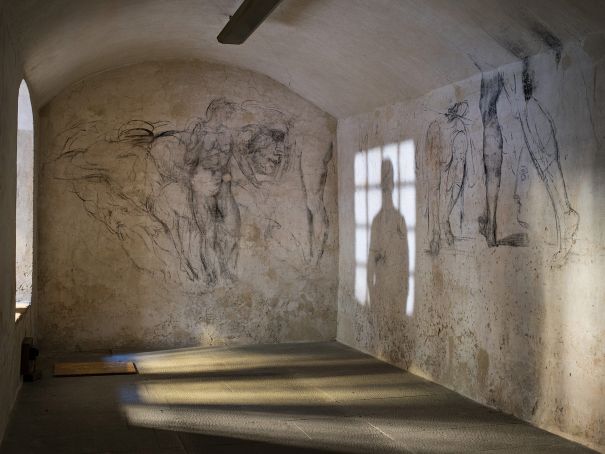
Florence to open Michelangelo's Secret Room


Michelangelo Buonarotti, the Italian High Renaissance master, gifted the world a stunning artistic legacy from the Sistine Chapel frescoes to magnificent sculptures such as the Pietà, David, Moses and Laocoön.
However not many people have heard of his so-called "Secret Room" in Florence, a tiny chamber with sketch-filled walls, which is reportedly set to open to the public in 2020.
During the summer of 1530 Michelangelo went "off-radar" for about three months, with no official trace of the artist's whereabouts on record.
Michelangelo was in fact holed up in a secret chamber, below the Medici Chapels in the Basilica of S. Lorenzo, in hiding from the Medici on their return from exile.

Man Quits His Aeronautical Job, Now Travels The World And Here’s What His Notebook Looks Like

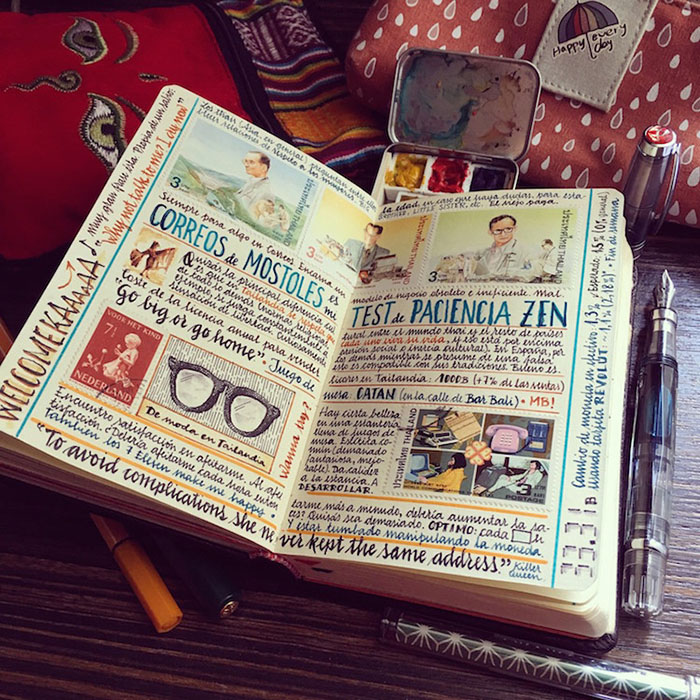
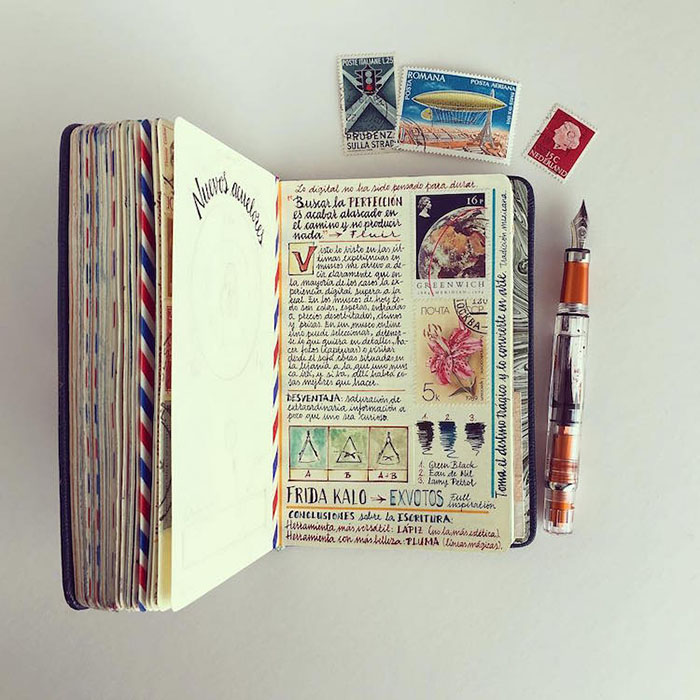
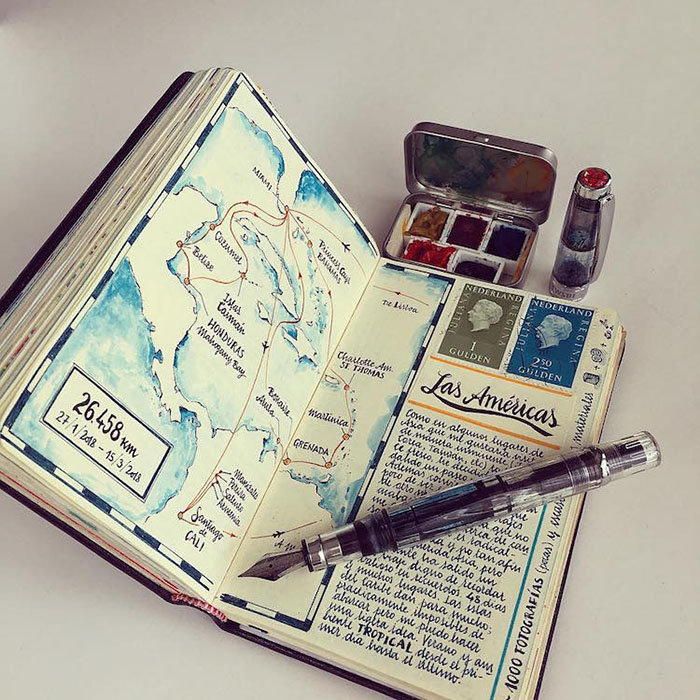
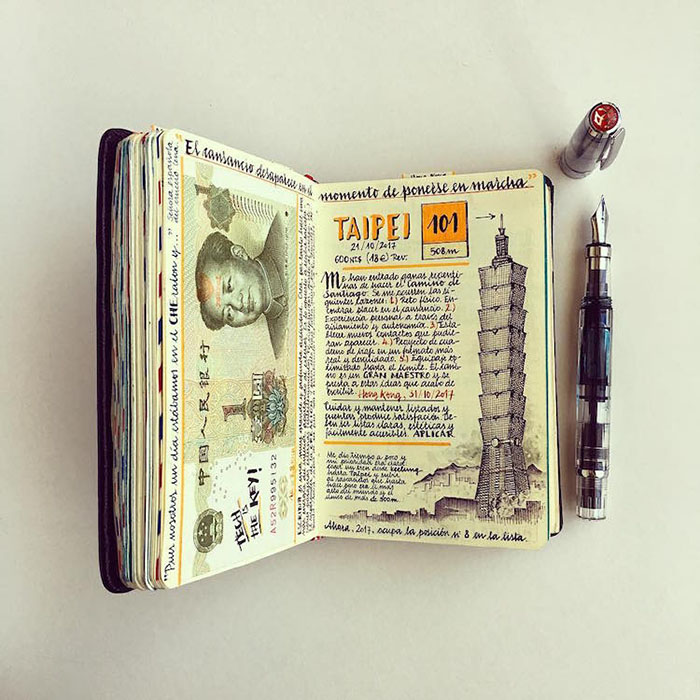
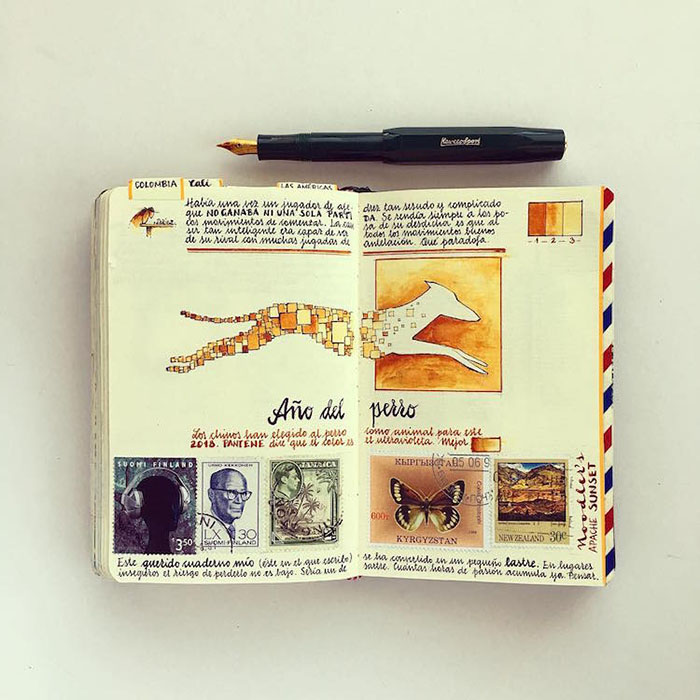
Jose Naranja turns ordinary notebooks into highly detailed works of art. The artist uses watercolors, stamps, writing, elements of photography and drawings to turn each notebook into a one of a kind masterpiece.
Jose has worked as an aeronautic engineer for many years but eventually decided to quit and devote his life to art and travels. The artist developed his passion for notebook art in 2005 when he discovered Moleskine pocket journals. As hard as it may be to believe, Jose is a self-taught artist, but his skills are remarkable. So far the artist has filled in 12 notebooks and recently has begun binding his own, to make his art even more personal.
If you would like to flip through the pages of one of Jose’s unique notebooks, you can buy one in his shop. Check out the artist’s amazing notebook art in the gallery below!
More info: josenaranja h/t


Friday, January 31, 2020

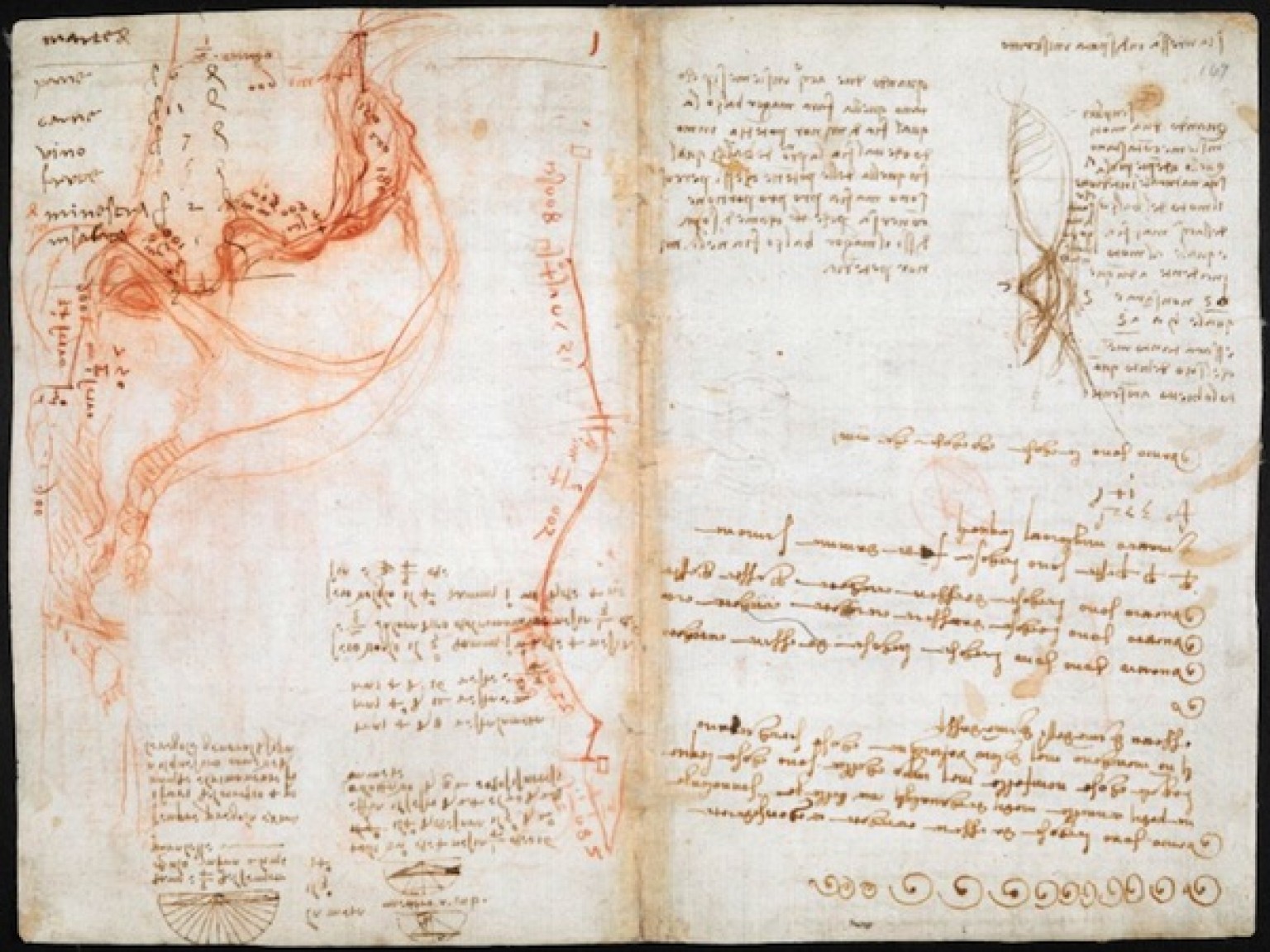
Leonardo da Vinci’s Visionary Notebooks Now Online: Browse 570 Digitized Pages

http://www.openculture.com/2017/07/leonardo-da-vincis-visionary-notebooks-now-online-browse-570-digitized-pages.html?fbclid=IwAR1B_tyHS0s_Mw6_Du_A18IS7Y0sEOQOdw2FVYhL6lYZNEi0QVADb_6ubs4


Okay, I’m sure you know a bit more than that, but unless you’re a Renaissance scholar, you’re certain to find yourself amazed and surprised at how much you didn’t know about the quintessential Renaissance man when you encounter a compilation of his notebooks—Codex Arundel—which has been digitized by the British Library and made available to the public.

Monday, April 15, 2019

Marking the passing of Tony Buzan

Tony Buzan - Mind Map Inventor, Nobel Peace Prize Nominee & Author of over 150 books on mind mapping, memory & creativity died of a heart attack on 13th April 2019. He was 76.


Monday, May 28, 2018

The Mojoptix Sundial

No batteries, no motor, no electronics...

The Mojoptix Sundial displays the time inside its shadow, with actual digits. The shape of the sundial has been mathematically designed to only let through the right sun rays at the right time and angle. This allows to display the actual time with sunlit digits inside the sundial's shadow.


Saturday, March 31, 2018

New Study Links Social Anxiety And Fear Of Being Caught Making Mistakes by Alfredo Carpineti

http://www.iflscience.com/brain/new-study-links-social-anxiety-and-fear-of-being-caught-making-mistakes/

An international team of researchers led by the University of Maryland have looked at the potential root of childhood social anxiety and found that others noticing their mistakes could play a role. The study is published in the Journal of the American Academy of Child & Adolescent Psychiatry
The study gave 107 children aged 12 the flanker task, which tests their ability to focus on information while disregarding distractions. They took the test twice: once when they were told they were being observed by peers and once when they were told they weren’t being observed. The team measured reaction times in both these cases and looked at the children's brain activity using an electroencephalogram.
Based on the children's post-error response times and brain activity, the team found a connection between social anxiety and a fear of making errors when under observation.

Thursday, November 17, 2016

Paper bicycle helmet wins the James Dyson Award

https://www.irishexaminer.com/examviral/technology-and-gaming/this-award-winning-paper-bike-helmet-could-save-your-life-431039.html


A rain-resistant, folding, paper bicycle helmet has won the prestigious international James Dyson Award for clever inventions.


The EcoHelmet is made from recycled paper woven into a honeycomb structure that protects the wearer’s head from impact from any direction.
It is designed for those using bike-sharing schemes who may not always carry protective headwear.
World-famous inventor Dyson praised it as an “incredibly elegant” solution to an “obvious problem”.
The prize, which is open to university level students or recent graduates, was won by design grad Isis Shiffer, of the Pratt Institute of Design in New York, who bagged a cool £30,000 for claiming top spot.
It beat a wearable asthma management system and smart contact lenses that can measure glucose levels to the award.
Isis said: “I was lucky enough to be studying at Royal College of Art and the Imperial College of London for a semester, and was granted access to Imperial’s crash lab.
“They had a European standard helmet crash set-up that allowed me to gather enough data on EcoHelmet’s proprietary honeycomb configuration to know it was viable and worth developing.”

Friday, September 30, 2016

SHOEBOX APPEAL !!!

https://www.teamhope.ie/christmas-shoebox-appeal/fill-a-box/


5 simple steps to follow

  1. Grab a Shoe boxOr a plastic container would be great! Wrap the box and lid separately with Christmas paper
  2. Print Label and choose who you want to give your Christmas Shoebox to and what age.
  3. Fill the boxGet as creative as you like and have some fun with this ! – You can use our 4 W’s as a rough guide
  4. Close the box
    • Include €4 in your leaflet envelope either on top of the gifts or taped to the inside of the lid.
    • To make it easier you can
      donate your €4 on our secure on-line site.
    • With elastic band – please don’t seal with tape as we need to check contents to comply with regulations.
  5. Drop it offTo your local drop off point closest to you
    before November 11th

Tuesday, September 27, 2016

Kansas family sues mapping company for years of 'digital hell' by Olivia Solon

https://www.theguardian.com/technology/2016/aug/09/maxmind-mapping-lawsuit-kansas-farm-ip-address

Geolocation company’s glitch sent police and angry businesses to a remote Kansas farm looking for criminals, and now the residents want compensation.


IP mapping isn’t an exact science and so MaxMind assigns a default address when it can’t identify its true location. That address just happened to be the Arnolds’ property, a remote farm that is located slap-bang in the middle of America.

More than 600 million IP addresses are associated with their farm and more than 5,000 companies are drawing information from MaxMind’s database.

It wasn’t just police who turned up on the Arnolds’ doorstep. Angry business owners would turn up claiming someone at the residence was sending their business thousands of emails and clogging their computer systems. Other people became convinced that someone living at the residence was responsible for internet scams.

A Kansas family whose remote farm was visited “countless times” by police trying to find missing people, hackers, identity fraudsters and stolen cars because of a glitch is suing the digital mapping company responsible.

James and Theresa Arnold sued MaxMind on Friday, filing a complaint in the US district court in Kansas. MaxMind, based in Massachusetts, allows companies to find out the location of the computers used by individuals to access their websites.

According to the complaint, the husband and wife team dealt with five years of “digital hell” after moving into the property in Butler County, Kansas, in 2011.

The couple had been drawn to the farm because it was close to the nursing home where Theresa’s mother was being cared for and the school that their two sons attended. The landlord also allowed the sons to hunt and fish on the surrounding 620 acres of land.

The first week after they moved in, two deputies from the Butler County sheriff’s department came to their house looking for a stolen truck, something that would happen again and again over the subsequent years.

“The plaintiffs were repeatedly awakened from their sleep or disturbed from their daily activities by local, state or federal officials looking for a runaway child or a missing person, or evidence of a computer fraud, or call of an attempted suicide,” the complaint said. At one point, James Arnold was reported for holding girls at the residence for the purpose of making child abuse films.

For half a decade the family was mystified about why this was happening until April this year when Fusion’s Kashmir Hill revealed the truth.

It all came down to glitch in the MaxMind’s IP address mapping database.

IP, or Internet Protocol, addresses are unique identifiers associated with computers or networks of computers connected to the internet. Through its GeoIP product, MaxMind matches IP addresses with their assumed geographic location, and sells that information to companies so they can use it to, for example, show targeted advertising or send someone a cease and desist letter if they are illegally downloading films

IP mapping isn’t an exact science and so MaxMind assigns a default address when it can’t identify its true location. That address just happened to be the Arnolds’ property, a remote farm that is located slap-bang in the middle of America.

More than 600 million IP addresses are associated with their farm and more than 5,000 companies are drawing information from MaxMind’s database.

It wasn’t just police who turned up on the Arnolds’ doorstep. Angry business owners would turn up claiming someone at the residence was sending their business thousands of emails and clogging their computer systems. Other people became convinced that someone living at the residence was responsible for internet scams.

More here:
https://www.theguardian.com/technology/2016/aug/09/maxmind-mapping-lawsuit-kansas-farm-ip-address


Thursday, August 11, 2016

Puzzle Book With Pages That Must Be Solved to Unlock the Next by​ James Gould-Bourn

http://www.boredpanda.com/puzzle-book-unlock-pages-codex-silenda-brady-whitney/?utm_source=facebook&utm_medium=link&utm_campaign=BPFacebook


Some books are hard to read, but few are as difficult as the Codex Silenda. Why? Because it actually won’t let you read it unless you’re smart enough to unlock it.

The laser-cut, hand-crafted, five-page wooden book is created by industrial designer Brady Whitney, who’s been raising funds for the project through Kickstarter. “Each page features a unique puzzle that requires the user/reader to unlock the corresponding bolts in order to progress to the next page,” read’s the website. “As the puzzler moves through the book, a story begins to unfold, depicting the story of an apprentice in Da Vinci’s Workshop who encounters the same Codex. However in the story the Codex acts as a trap set by Da Vinci to capture any would be spies/snoopy apprentices in order to protect his work. The only way to escape is to solve each of the puzzles before the master returns from his trip.”


Tuesday, December 1, 2015

Lin-Manuel Miranda: The Hamilton Mixtape


How does a bastard, orphan, son of a whore
And a Scotsman, dropped in the middle of a forgotten spot
In the Caribbean by Providence, impoverished, in squalor
Grow up to be a hero and a scholar?
The ten-dollar Founding Father without a father
Got a lot farther
By workin' a lot harder
By bein' a lot smarter
By bein' a self-starter
By fourteen they had placed him in charge of the trade and charter
And every day while slaves were being slaughtered
And carted away across the waves
Our Hamilton kept his guard up
Inside he was longing for something to be a part of
The brother was ready to beg steal borrow or barter
Then a hurricane came and
Devastation reigned and
Our man saw his future drip drippin' down the drain
Put a pencil to his temple
Connected it to his brain
And he wrote his first refrain
A testament to his pain
When the word got around, they said, "This kid is insane, man!"
Took up a collection just to send him to the mainland
Getcha education, don't forget from whence you came
And the world is gonna know your name!
What's your name, man?

[Hook]
Alexander Hamilton, his name is Alexander Hamilton
And there's a million things he hasn't done
But just you wait, just you wait

[Verse 2]
When he was 10, his father split
Full of it, debt-ridden
Two years later, see Alex and his mother, bed-ridden
Half-dead, sittin' in their own sick, the scent thick
And Alex got better but his mother went quick
Moved in with a cousin, the cousin committed suicide
Left him with nothin' but ruined pride
Somethin' new inside
A voice saying Alex, you gotta fend for yourself
He started retreatin' and readin' every treatise on the shelf
There would've been nothin' left to do
For someone less astute
He would've been dead or destitute
Without a cent of restitution
Started workin', clerkin' for his late mother's landlord
Tradin' sugar cane and rum and other things he can't afford
Scannin' for every book he can get his hands on
Plannin' for the future, see him now as he stands on
The bow of a ship headed for a new land
In New York you can be a new man
The ship is in the harbor now
See if you can spot him
Another immigrant comin' up from the bottom
His enemies destroyed his rep, America forgot him
And me? I'm the damn fool that shot him

[Hook]
Alexander Hamilton
We were waiting in the weeds for you
You could never back down
You always had to speak your mind
But Alexander Hamilton, we could never take your deeds from you
In our cowardice and our shame
We will try to destroy your name
The world will never be the same, Alexander!

[Outro]
Yeah, I'm the damn genius that shot him

Monday, November 16, 2015

The 3-Pipe Solution: The Underrated Creativity of Sherlock Holmes

http://www.theatlantic.com/entertainment/archive/2013/01/the-3-pipe-solution-the-underrated-creativity-of-sherlock-holmes/266843/

Holmes is often portrayed as a mechanical logician, but his approach depends more on outside-the-box thinking that, according to modern research, really does help solve problems.


When most people think of Sherlock Holmes, they see a paragon of calculating logic: a chilly, computer-like machine with endless powers of reason. As the UK'sTelegraph put it, "If Holmes is not cold, inhumanly calculating ... he's just not Holmes"—echoing the words of such prior Holmesians as David Grann, who wrote in The Devil and Sherlock Holmes that "Holmes is a cold, calculating machine, a man who is, as one critic put it, 'a tracker, a hunter-down, a combination of bloodhound, pointer, and bull-dog." Even Holmes's creator, Arthur Conan Doyle, tried to dismiss him as "inhuman as a Babbage's calculating machine" when he tired of his creation, just a year before he tried to kill him off entirely in "The Final Problem." But in reality, that perception is far from the truth. In working on my new book Mastermind: How to Think Like Sherlock Holmes, it occurred to me that what allows the detective to attain the heights of deduction that he does is the very thing a computer lacks entirely: the power of imagination.

Consider: When Sherlock Holmes is asked to investigate a mysterious death on the shores of a small village in Sussex, he realizes that the cold-blooded, vicious murderer—the victim has terrible weals all along his back, "as though he had been terribly flogged"—is not exactly of the human variety. While the police focus their efforts on Ian Murdoch, a competitor for the affections of the dead man's fiancée, Holmes follows instead a lead of a different sort: the dead man's last words, "lion's mane." Those words, in turn, lead him to the real killer, none other than a deadly jellyfish.

How does Holmes come upon his solution? He not only opens his mind to the possibility of the nonlinear and improbable, the very hallmarks of creativity, but he makes certain that he has that mind stocked with the most esoteric of knowledge. It's easy to remember Holmes's famous rant to Dr. Watson on the necessity of keeping a pristine mind attic (Holmes's metaphor for the human mind). Far harder is recalling the major asterisk that is attached to that warning: A mind attic is only as useful as its contents and how you use them. If you store only the essentials, and follow only the most obvious path, you can be a t-crossing, i-dotting Scotland Yard detective bar none, but aren't likely to advance much beyond that. Your mind will never be able to make those elusive connections that could lead you to identifying a fish as a killer if you don't have the requisite knowledge base to begin with—and if you aren't willing to risk the possibility of letting a killer go free while you take the time to figure things out.

We remember Holmes's organized logic. We forget that in his mind space, there dwell not only jellyfish with stings that kill, but polyphonic motets and obscure paintings, tomes on bee keeping and discussions of philosophy. Holmes knows that the earth goes round the sun, and then some. And he isn't afraid to employ that knowledge in a non-traditional way. How can he discover the real killer unless he is willing to consider a possibility so seemingly outlandish that it makes him look like a doddering old man? Over and over, his is not the approach of a ruthless logician, but rather one of someone who knows all too well the power of the creative mind.

Why, then, do we tend to forget this essential element of Holmes's approach? As it turns out, it's not at all uncommon to sweep aside the uncertainty of imaginative meandering in favor of the certainty of hard science. Nobel-winning physicist Richard Feynman often expressed surprise at just how often people did that very thing: forget how central creativity is to the scientific method. "It is surprising that people do not believe that there is imagination in science," he once told an audience, echoing the lament of fellow physicist Albert Einstein who, too, bemoaned our propensity to embrace logic at the expense of imagination and intuition—and did so as early as 1929. Now, there is evidence that this tendency to dismiss the imagination of the scientific approach goes much deeper than mere observation. In their frustration, Feynman and Einstein captured what appears to be a basic tendency of the human mind.

In 2011, a team of psychologists led by Jennifer Mueller decided to test a common paradox: Even though we say we value creativity, we often tend to reject creative ideas. The problem, they hypothesized, might lie in our inherent distrust of uncertainty. To test their assumption, they asked a group of participants to take part in a task known as the IAT, the implicit association test. Originally designed to test racial biases, the IAT has since been used to look at bias in any number of areas—age, sex, weight, and the like—by measuring the time it takes for someone to react to a given characteristic that's been paired with a label of either "good" or "bad" by pressing a previously designated key. If we're slower to respond when the trait of interest is paired with negative labels than when it's paired with positive ones, that discrepancy is taken as evidence of bias. In this particular instance, the target concept was creativity.

The researchers first assigned participants to either a certain or an uncertain condition. In the one, subjects had no opportunity to earn extra money, while in the other, they were told that they would potentially receive extra payment, as determined by a future lottery. Both groups then completed the IAT, where creativity-related words, like "novel" or "original," and practicality-related words, like "constructive" and "useful," were paired with positively and negatively valenced stimuli, like "rainbow" and "vomit," respectively. They were then asked to rate their explicit attitudes toward creativity.

What the psychologists discovered might seem counterintuitive, in the age of Apple and Steve Jobs's "Think Different" motto: When faced with uncertainty, we tend to be biased against creative thought. Despite their explicit assertions to the contrary, participants in the uncertain condition—the one in which they believed they had a chance to win money—repeatedly favored practicality over creativity.

Perhaps it's not so surprising, then, that we forget the very thing that makes Holmes, Holmes: his willingness to embrace that uncertain path. The view of Holmes-as-machine is both simpler and safer. It is a line of thinking more in tune with our implicit biases than its alternative—after all, isn't the world as uncertain a place as they come?

Creativity requires novelty. Imagination is all about counterfactuals and untested possibilities that don't yet exist. It is, in short, all about uncertainty. And uncertainty is as frightening as it is potentially embarrassing (there's never a guarantee of success, is there?). Why do you think Conan Doyle's inspectors are always so loath to depart from standard protocol, to do anything that might in the least endanger their investigation or delay it by even an instant? Holmes's imagination frightens them. They aren't willing to take a step back, pause in their headlong pursuit of the culprit, and see whether their path is in fact the best one to take.

But that shortsighted linearity need not be the status quo. After all, many a thinker realer than Holmes manages to overcome to overcome that fear of uncertainty and failure to come up with ideas of incredible daring and imaginative reach. So, how to master that unacknowledged predilection for the tried and true? The answer, once again, might come from Holmes's habits, specifically, from his practice of mindfulness.

When faced with a problem, Holmes often favors the three-pipe solution: Rather than spring into action, he sits with his pipe and allows his mind the time and space to process the case at hand. Such mindful concentration, new research shows, may lead to increased connectivity in the brain's default network, the connections that are active when our brain is in its so-called resting state, in between overt, directed activity. And that connectivity? It may, in turn, allow us to be more creative.

In a study published this fall in the Proceedings of the National Academy of Sciences, researchers from the University of Oslo found that connectivity in the default network was related to the quality of past recollection and future speculation in a group of more than 100 children and adolescents: The greater the neural ties, the better the subjects performed on a standard cue-word task, where they had to either recall a past event or imagine a future scenario as prompted by neutral prompts like "forest" or "travel."

Could increased creativity, then, be a mere quiet pipe away? If we rush too quickly to be scientific, to begin our experiment or catch our criminal as soon as possible, we risk never getting to the answer at all. But if we not only remember just how central imagination is to the very scientific method, but then make a habit of quietly reflecting on whatever problem confronts us instead of jumping right in, we may find ourselves over time becoming more creative to begin with, strengthening those very neural connections that will in turn allow us to arrest that jellyfish—and avoid the very embarrassment that we thought we'd escape by sticking only to the path of the tried and true.

Saturday, November 14, 2015

10 Irish Inventions that Changed the World

https://www.thinkbusiness.ie/articles/10-world-changing-irish-inventions/?utm_source=facebook.com&utm_medium=social_paid&utm_campaign=business%20planning_site_content

Here are ten amazing Irish inventions that had a global impact.

Colour photography, invented by John Joly in 1894

Modern day photographers owe a debt of gratitude to a man from the Irish midlands. John Joly was born near the village of Bracknagh in Co. Offaly and was an engineering graduate from Trinity College. In 1894, Joly invented a system of colour photography that was based on taking viewing plates with many narrow lines in three colours. Joly would mark the viewing plate with thin coloured lines and would then place the glass in the camera in front of the picture; the photograph could then be taken. This process was much simpler than anything that had come before. It is now widely accepted that he was responsible for the first practical method of colour photography.

The Guided Torpedo, invented by Louis Brennan in 1877

Would you believe that the world’s first guided missile originated from Castlebar? Louis Brennan, a talented engineer from Castlebar, created a directable torpedo that could be controlled by guide wires. The first design of the torpedo was produced when Brennan was 25. He received funding from the British Navy. In 1887, a government factory began producing “Brennan’s” in Kent. The “Brennan” would go on to be used as a defence mechanism by the British Coastal Defence Forces until the early 20thcentury. However, so far as is known, it was never fired in anger.

The Hypodermic Syringe, invented by Francis Rynd in 1844

Francis Rynd, a Dublin doctor, performed the world’s first subcutaneous injection with his homemade hypodermic syringe. Rynd had been treating a woman who had pain in her face for years and was taking morphine pills without relief. Rynd decided to place the morphine directly under her skin and near the nerves. He created a narrow tube and a cutting implement known as a trocar. Four punctures holes were made, the morphine flowed through the tubes and the rest, as they say, is history.

The Binaural Stethoscope, invented by Arthur Leared in 1851

One of the most important tools in modern medicine, the binaural stethoscope, was invented by a man from the South-East of Ireland. The stethoscope was originally invented in 1819 by a Frenchman, namely, Rene Laennec. Arthur Leared, a Wexford native, realised that Laennec’s instrument could be more effective, so he connected two earpieces to the listening cylinder with rubber tubes. Leared went on to display the stethoscope at the Great Exhibition in London in 1851 and received critical acclaim. The binaural stethoscope paved the way for the development of the modern stethoscope.

The Induction Coil, invented by Rev. Nicholas Callan in 1836

Believe it or not, the induction coil was invented by a priest. Rev Nicholas Callan, a professor of science at St. Patrick’s College Maynooth. Rev Callan was one of Ireland’s greatest inventors. For the induction coil, Callan wound two long wires around the end of an electromagnet and connected the ends of one wire to a battery. When he interfered with or interrupted the current from the battery he received a spectacular spark from the end of the second unconnected coil and consequently the induction coil was born. Funnily enough, the Reverend managed to knock a future archbishop of Dublin unconscious while carrying out tests for his induction coil. Callan’s creation, which is over 170 years old, is still used in car ignitions today.

The Ejector Seat, invented by Sir James Martin in 1946

Bond fans might be surprised to learn that the inventor of the ejector seat was an Irishman. In July 1946, the first live test of an ejector seat took place. The test proved to be a success when an explosion blew away the pilot’s cockpit and a second explosion propelled the pilot out of the plane that enabled him to parachute to safety. As a result, the RAF approved Martin’s idea and within 12 months the entire RAF fleet had been fitted with ejector seats. It is believed that Martin’s invention saved over 5,000 lives by the time of his death in 1981.

The Submarine, invented by John Philip Holland in 1878

It was a rebel from Liscannor, Co. Clare, who completely changed the way war could be conducted at sea, as well as deep sea exploration. Holland, a school teacher, emigrated to Boston in 1872. His first prototype sank on its launch. However, in 1881 Holland launched the ‘Fenian Ram’, funded by the Fenian Brotherhood. It proved to be a success. In the following years, Holland won three competitions run by the US Naval Department to design and build submarines. However, political factors meant that this was an unsuccessful venture. Finally, after successful trials, the US Navy purchased the ‘Holland VII’, its first submarine, and proceeded to order six more. The submarine was now a must-have in naval warfare.

The Bacon Rasher, invented by Henry Denny in 1820

An essential part of the ‘full Irish’, the bacon rasher, was invented by Henry Denny, a Waterford butcher. Denny patented several bacon-curing techniques and completely re-invented the process of how to cure bacon. Before this, bacon was cured by soaking large chunks of meat in brine. Denny decided to use long flat pieces of meat instead of chunks and substituted the brine for dry salt. Soon after, Denny began exporting to mainland Europe, the Americas and as far afield as India. The overall quality and shelf-life of the bacon was dramatically increased. It was an ingenious but simple innovation for its time.

The Cream Cracker, invented by William and Robert Jacob in 1885

Like the bacon rasher, the cream cracker was also invented by a Waterford family in the 1800s. In 1885, the Jacob Family produced this biscuit from yeast dough that was left to ferment for 24 hours. It was flattened and then folded numerous times to create a layered biscuit. Jacob’s Cream Crackers that have been a family favourite since their inception are now produced by machines that can create approximately one million crackers an hour. They are also available to buy in over 35 countries worldwide.

Flavoured Potato Crisps, invented by Joseph ‘Spud’ Murphy in 1954

Luckily for us, Joseph ‘Spud’ Murphy had an enormous distaste for plain crisps. It was the 1950s that saw the introduction of the flavoured potato crisp. Murphy, the founder of Tayto, developed a cheese and onion flavoured crisp in 1954 which would prove to be a success, both at home and abroad. By the 1960s, ‘Spud’ had become a millionaire and was described by Sean Lemass as the very acme of Irish entrepreneurial spirit. Gratefully, we still have manufacturers experimenting with flavours, something that we have ‘Spud’ Murphy to thank for.

Sunday, October 18, 2015

Buck Rogers and the Copyright Trolls

http://boingboing.net/2015/10/16/buck-rogers-and-the-copyright.html


Remember the Sherlock Holmes case where the Conan Doyle Estate was shaking everyone down for sub-litigation payoffs and asserting claims over Holmes (despite serious copyright scholars all saying they had no right to do so) until Les Klinger stuck to his guns?

Now it’s happening again, with some minor variations, only this time the weapon of choice is Buck Rogers. 

The character of Anthony “Buck" Rogers first appears in Philip Nowlan’s 1928 novel ARMAGEDDON 2419 A.D. (itself a combination of two novellas that appeared in the AMAZING STORIES magazine) and serves as an origin story for the character. Rogers, after a mine cave-in, falls into a state of suspended animation and wakes up in the 25th century amidst a futuristic war.

Rogers is never referred to as “Buck" in the novel, the nickname coming in 1929 when Chicago newspaperman John F. Dille hired Nowlan to create a comic strip called “Buck Rogers in the 25th Century A.D."

The ARMAGEDDON novel is out of copyright, as under US copyright law, it was entitled to protection until 1956, at which point the copyright needed to be renewed by either the author or owner. It never was, and entered in to the public domain in the U.S. at that time. It currently can be read for free on Project Gutenberg.

Under most non-U.S. copyright laws based on the Berne Convention, a work is covered for a period of “life plus 50." Nowlan died in 1940.
There is little doubt that the character of Buck Rogers originated from the original ARMAGEDDON novel, yet that hasn’t stopped the Dille Family Trust, an entity representing the estate of the John Dille, from asserting copyright claims over him.

The Trust is represented by Louise Geer, who, along with her husband Dan Herman owns a small law practice in New Castle, Pennsylvania (Herman also runs a boutique comic book company called HERMES PRESS). They managed to continue licensing the Buck Rogers character by controlling trademarks and because many of the familiar elements of the character were introduced in the comic strip.

Enter Don Murphy, producer of NATURAL BORN KILLERS, REAL STEEL and all of the TRANSFORMERS films (also the guy who’s optioned LITTLE BROTHER for Paramount, incidentally). He is the Les Klinger of Buck Rogers.

Murphy, with his company Angryfilms, was trying to make a Buck Rogers movie, but was unable to make a deal with the Trust. He then decided to focus his attention on the public domain ARMAGEDDON novel, feeling that the Buck Rogers “brand" didn’t mean that much to today’s filmgoers and wasn’t necessary for the story. He even retained Flint Dille, a gamer, screenwriter and most interestingly, the grandson of John Dille, to co-write the screenplay.

Soon after the announcement of the ARMAGEDDON 2419 film, Geer and Herman began to barrage Murphy with threatening letters, claiming they owned the Nowlan novel, either to shut the movie down and/or extract a rights payment. They even threatened Dille, who is one of the beneficiaries of the trust itself!

Murphy responded by filing suit in court, asking for a judgment that the Nowlan novel is in the public domain. Furthermore, he asked (as Klinger did with Holmes) for a declaration stating that since the character of Buck Rogers has his origins in the public domain novel, the character itself is therefore in the public domain and all trademarks for it should be voided.

Geer and Herman, like all good copyright trolls, have attempted to get the suit tossed out of California on venue issues and moved to New Castle. They are being represented by David Aronoff, who regularly takes on these types of cases and boasts on his website about his attempt to assert a claim for a Zorro copyright, despite that work having entered the public domain.

The copyright troll business-model is to make claims to stuff you don't own and then demand sums that, while appreciable, are below the threshold at which litigation is economically rational, so creators just pay you rent on something you don't own, filling your war-chest with money you can use to attack other creators.

Hermes Press, the comics publisher run by Buck Rogers' jailers, also buys up a lot of young creators' work for small money on terms that are very favorable to the business. Anyone contemplating selling their work to a press associated with the kind of outrageous legal shenanigans Hermes's owners get up to should tread very carefully indeed. After all, if this is their idea of a fair deal, how will things go when you have a dispute with them?

Our beloved characters and stories are being used as magic money-spinners by copyright trolls, who act as toll-collectors and gate-keepers to the public domain, ripping off creators who want to tell stories and audiences who’d enjoy them.

For now, we have two ways of felling trolls: the Happy Birthday way, which is to make a movie about a legal battle with the copyright troll, and use the film’s budget to fund the litigation (sadly, this was a one-off); and stubborn people who won’t be pushed around going to court and refusing to back down.

Luckily for Buck Rogers, there’s a stubborn person who’s willing to fight on all our behalf to smite Buck’s copyright jailers.